As you may know, if you read my blog post Well, This Sucks, last year, I was diagnosed with a rare chronic illness. Neuromyelitis optica is an autoimmune disease that affects the central nervous system.
NMO does not have a cure, and I will have it for the rest of my life. I decided to dedicate my last project in my multimedia journalism course to students like me who have chronic illnesses or disabilities, whether invisible or physical.
Below, you can learn more about chronic illnesses and disabilities, read an article about two Cal State Long Beach students with invisible disabilities, listen to a podcast with the Associate Senior Director of the Bob Murphy Access Center and watch a video featuring a student with cerebral palsy.
I hope you learn something new, and thank you again to those featured below for keeping it chronically real.
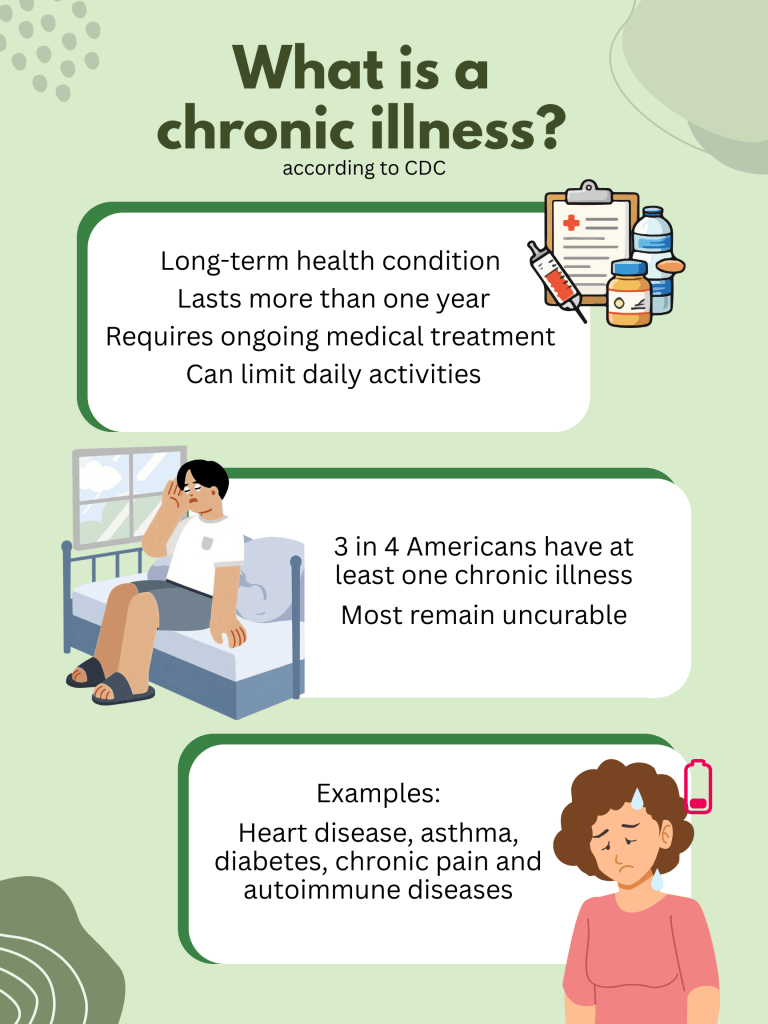
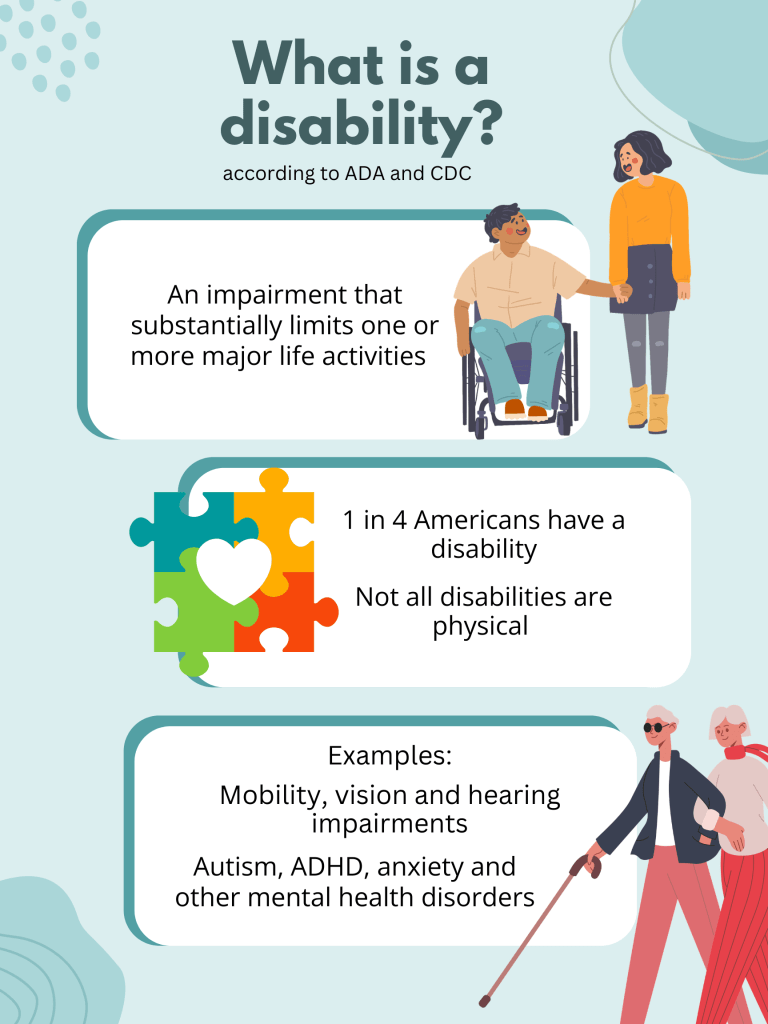
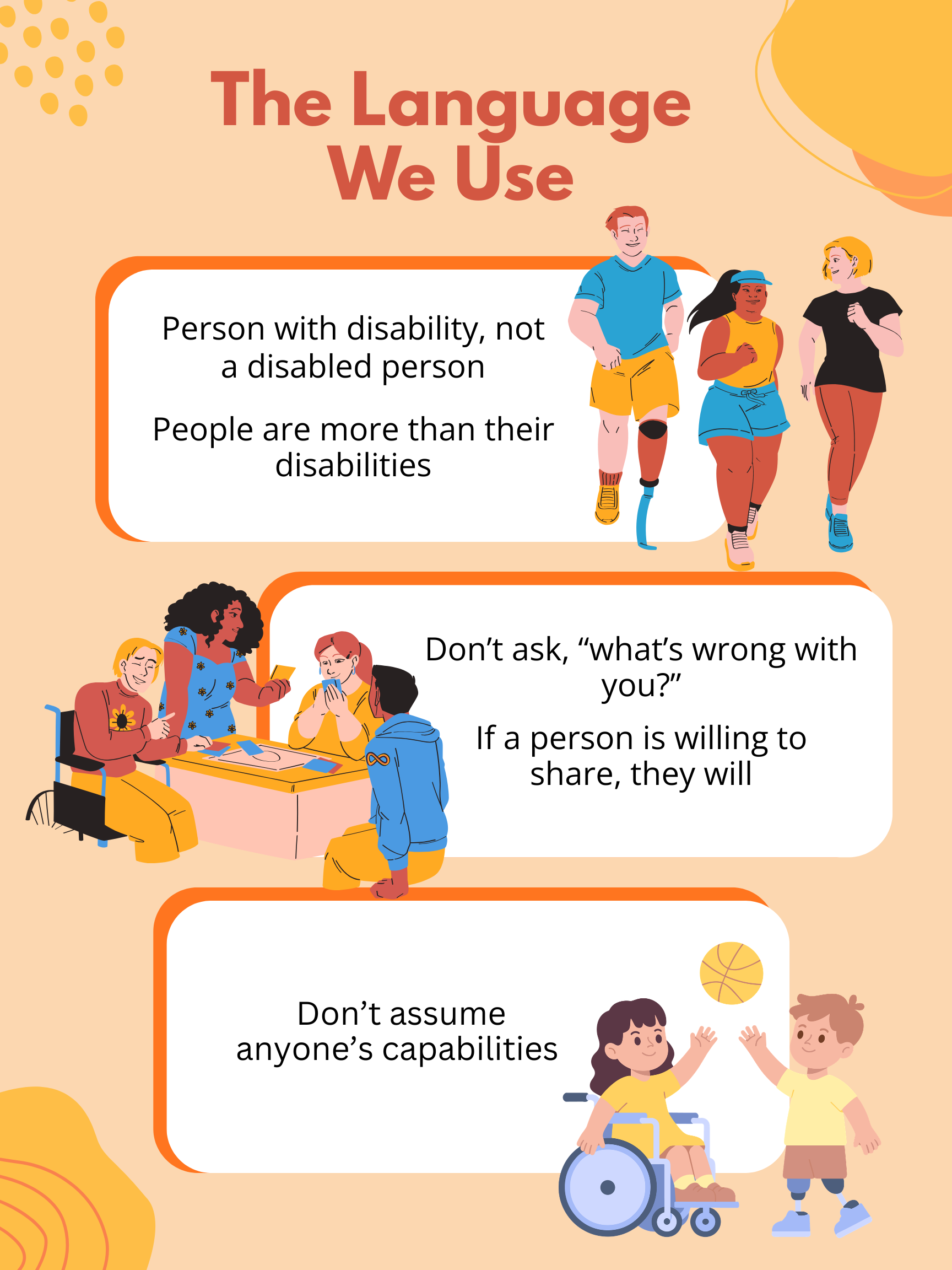
Chronic Illnesses and Disabilities Explained
Chronically Real with Genesis and Amia
Click to read the full article
If you’ve ever been to the upper campus of California State University, Long Beach (CSULB), you may have passed a glass building called the Bob Murphy Access Center (BMAC), a service to help students on campus with disabilities get the accommodations they need. BMAC currently serves over 3,700 students, which is almost 10% of CSULB’s population. One of them is Genesis Rodas, a student with social anxiety disorder (SAD) and a learning disability.
“It’s really hard. I don’t like a lot of people. I don’t mind talking to people, but I get so anxious just being around a lot of people. I get anxiety attacks a lot,” said Rodas.
According to the 2023-2024 Healthy Minds Study, 34% of the over 104,000 students from 196 colleges reported moderate to severe anxiety.
“I wish people understood that there’s a lot to it that they don’t see. I really wish they understood what it feels like to have it and live with it every day, because sometimes it gets in the way of me doing things,” said Rodas.
A common misconception is that anxiety is simply an emotion. However, social anxiety disorder can make it hard to socialize or complete tasks. For some people with SAD, like Rodas, it can even lead to anxiety attacks. According to Harvard Health, symptoms of anxiety attacks can include shortness of breath, shakiness, increased heart rate or more.
Fortunately, Rodas’ accommodations through BMAC have aided her experience in classes. She gets extra test time for exams and described the process of getting the accommodation approved as smooth.
Amia Gee also utilizes similar accommodations. She shared that she has anxiety, post-traumatic stress disorder (PTSD) and depression.
“When my symptoms are more severe, it becomes hard to complete my assignments. I can’t focus in class, and sometimes I miss class due to hospitalizations. I experience fatigue, panic attacks, and extreme stress,” said Gee.
Because of this, Gee is allowed extra test time, and she can take exams at the BMAC test center. She can also take breaks, access professors’ lecture slides and use text-to-speech exams.
There is often discourse about whether students who receive accommodations have an unfair advantage. However, Danny Paskin, a CSULB journalism professor, said otherwise.
“Accommodation is not about giving somebody a leg up, it’s about leveling the playing field,” said Paskin, who also has a disability.
This is a concept that Paskin said opened his eyes years ago. While some may think of accommodations as a “leg up,” Paskin said it’s just ensuring that students who have a harder time completing the same tasks as others have the tools they need to succeed. Paskin said that during his 18 years of teaching at CSULB, he has been fortunate enough not to encounter many professors who won’t accommodate these students.
“I grew up at a time and place where accommodations were not a thing. I’m absolutely for, probably more than anybody else, students showing up regarding their accommodation… I would hope every professor does that, no matter what. Not only because BMAC told them that they’re supposed to, but also because it’s the right thing to do,” Paskin said.
Many students pass by peers like Rodas and Gee every day, not knowing the challenges they face. However, they are more than their disabilities.
Outside of school, Rodas and Gee have found activities that help them cope. Rodas enjoys working out at home, journaling and writing poetry occasionally to help with her anxiety.
Gee works at a nonprofit teaching children how to play guitar, ukulele, and piano. She is also helping create content for the organization’s social media. She journals, reads and plays classical guitar.
There are thousands more students like Rodas and Gee at CSULB. The accommodations they receive through BMAC help level the playing field so they can achieve the same success as everyone else.
Chronically Real with Jessica
Chronically Real with Zachariah
#chronicillness #colllegestudentwithchronicillness #youngchronicillness #studentswithdisabilities #youngpeoplewithdisabilities #anxiety #depression #ptsd #campusdisabilityservices #accessibility #collegeaccessibility #highereducation #commonmisconceptions


Leave a Reply